- Retirement Examined
- Posts
- Retirement Examined
Retirement Examined
5-Minutes of Breakthrough Secrets: Happy, Fulfilling Retirement

Eric Seyboldt
December 11, 2025
In partnership with

The weekly email that keeps you up to date on exciting Retirement topics in an enjoyable, entertaining way for free.
The Price of the Era: Why One Generation Built Wealth—and the Next Must Engineer It
by Eric Seyboldt, MBA

Every generation wants to believe it rose on grit alone. It is a comforting story. It is also incomplete. Wealth is not built in a vacuum—it is built inside a price system. Baby Boomers came of age during a period when the core inputs of financial life—housing, healthcare, education, and retirement security—were structurally cheap and institutionally supported. That cost environment, more than superior behavior, explains today’s generational wealth gap. This is not an argument about effort. It is an argument about math.
Housing remains the cornerstone. Boomers typically purchased homes at price-to-income ratios near two-to-one or three-to-one. That ratio now routinely runs five-to-one or higher. Earlier buyers captured leverage at a time when leverage still worked. Three to four decades of appreciation, tax advantages, and refinancing converted shelter into capital machinery. For younger households, housing more often behaves as a constraint before it becomes an asset. What once accelerated wealth now delays it by design of the price.
During much of the Boomer working years, medical costs consumed a modest share of income. Today, younger workers surrender a significantly larger portion of earnings to premiums, deductibles, uncovered procedures, and dependent coverage. The disappearance of employer-sponsored retiree healthcare completed this shift. Risk that was once pooled by institutions now lands directly on household balance sheets. The compounding damage of that shift is rarely modeled—but it obviously dominates long-run savings capacity.
Education completes the structural triad. College once functioned primarily as workforce preparation at manageable cost. It now functions as a multi-decade debt instrument. Many Boomers exited school owing little or nothing. Their children now often begin adult life carrying liabilities larger than their first year’s earnings. This changes everything. When the first decade of income services debt instead of building assets, the entire wealth curve flattens permanently.
Markets did deliver historic returns in the 1980s and 1990s. But markets do not create surplus—they only multiply it. Investment presumes excess cash flow. Boomers invested because their monthly cost structure made it feasible. Younger generations face financial compression from their first paycheck. This is why identical behaviors across eras create radically different outcomes. Returns magnify opportunity; they do not manufacture it.
What has truly occurred is not a wealth transfer—it is a risk transfer. Pensions gave way to self-funded retirement exposure. Retiree healthcare gave way to private deductibles. Affordable education gave way to leveraged credentials. Longevity risk, market risk, healthcare risk, and tax risk now sit squarely with the household. The American family has become the shock absorber once provided by corporations and public systems.
The most common mistake modern families make is assuming they are simply late to the same game. They are not. The rules have shifted. Income must now be engineered, not merely earned. Debt must be positioned deliberately, not tolerated passively. Assets must be selected for stability as well as upside. Retirement can no longer rely on markets alone. Taxes can no longer be treated as a background nuisance; they are a primary expense category.
The dividing line in modern household finance is no longer hard work versus idleness. It is architecture versus improvisation. Families who manage costs passively will always feel behind. Families who design around costs regain leverage—even inside hostile pricing environments.
The Boomer generation did not win because they were stronger. They won because the terrain was flatter. Today’s families are not weaker—they are climbing steeper ground with more weight on their backs. Steep ground changes every step. The future will not be built by accident. It will be built by households that understand the structure of the game they are actually playing—and refuse to pretend it is still the old one.
Reach out to us for a complimentary, 10-minute consultation call. A well-constructed retirement strategy should do more than just manage risk—it should provide clarity, confidence, and long-term stability. Schedule a complimentary 10-minute consultation by calling 614-943-2265. Thoughtful planning today can help ensure your retirement is built on a foundation of informed choices—not guesswork.
Does your car insurance cover what really matters?

Not all car insurance is created equal. Minimum liability coverage may keep you legal on the road, but it often won’t be enough to cover the full cost of an accident. Without proper limits, you could be left paying thousands out of pocket. The right policy ensures you and your finances are protected. Check out Money’s car insurance tool to get the coverage you actually need.

Why Debt Is No Longer a Temporary Problem
by Eric Seyboldt, MBA
There was a time when debt meant something very specific. It meant “between.” Between school and work. Between renting and owning. Between one season of life and the next. You passed through it and moved on. That era is over. For millions of households today, debt is no longer a phase—it is a permanent financial condition. Not because families suddenly became reckless, but because the economic structure quietly changed underneath them.
Client: Eric, why does it honestly feel like debt never actually goes away anymore?
Eric:
Because structurally, it rarely gets the chance to. Previous generations used debt to bridge short periods of life. Today’s households use debt to finance entire decades. Student loans stretch into middle age. Vehicle loans refresh every five or six years. Medical bills arrive without warning. Credit cards now stabilize monthly cash flow instead of funding convenience. One balance replaces another. The slate never fully clears.
Client: But people always had mortgages. What’s different now?
Eric:
The mortgage used to be the only long-term obligation. Everything else was short and self-liquidating. Today households carry stacked debt: mortgage, student loans, auto loans, revolving credit, medical balances, and subscription financing—all at once. The household balance sheet went from one anchor to several.
Client:
So is this mostly a spending problem?
Eric:
It’s a sequencing problem. Costs now arrive before income matures. Education is financed before earnings stabilize. Transportation is financed before savings exist. Healthcare strikes unpredictably. Debt now fills timing gaps that income once handled naturally. That’s not irresponsibility, it’s economic pressure.
Client: Then why does paying things off still feel like running in place?
Eric:
Because interest has become a permanent tax. Boomers used interest briefly; modern households pay it continuously. When interest never disappears, effort stops feeling productive. You earn, you pay, and the balance persists.
Client: So what actually works now—besides just “working harder”?
Eric:
Today, debt must be repositioned before it is reduced. Cash flow must be stabilized before balances are attacked. Assets must be layered to offset liabilities—not just eliminate them. The new objective is not simply “debt-free.” It is debt-controlled, where income and assets dictate the terms.
Let’s make this concrete.
Client: Yes—what does that actually look like in real life?
Eric:
Consider a household with $38,000 in student loans, $21,000 in auto loans, $14,000 in credit card debt, a $265,000 mortgage, and a combined income of $145,000. They were aggressively “paying everything down.” Extra payments everywhere. The problem? Every dollar sent to high-interest debt starved their cash reserves. When the next expense hit, like their car’s transmission failure, they were right back on credit cards.
Instead of attacking balances emotionally, the strategy changed. First, cash flow was stabilized so emergencies stopped becoming debt events. Next, high-interest debt was consolidated and repositioned into structured repayment with predictable payoff. Then part of their excess monthly flow was redirected into protective asset vehicles designed for liquidity and control—not speculation. Only after that did aggressive principal reduction begin. Within 30 months, total consumer debt fell by over 60%—not because they “tried harder,” but because the financial structure finally stopped fighting them.
Client: So the mistake people make is attacking debt before fixing the system around it?
Eric:
Exactly. People use behavioral tools to solve a structural problem. Behavior matters—but structure decides outcomes. Without control of cash flow and access to properly designed assets, debt reduction becomes temporary relief instead of permanent change.
Debt did not become permanent because families became weaker. It became permanent because the economy became front-loaded with cost and back-loaded with reward. In the old system, debt was a bridge. In the new system, it is a landscape. Landscapes do not yield to willpower alone. They require design.
The real danger is not debt itself. The danger is pretending it still behaves the way it did thirty years ago. It doesn’t. And pretending otherwise is how people work harder every year—while standing perfectly still.
Contact us for a complimentary, 10-minute estate planning consultation. Moving across state lines—or through life’s major milestones—deserves the same level of care and foresight as building your wealth in the first place.
Call Eric Seyboldt at 614-943-2265 to schedule your free estate and legacy review. Because the plans that protect your family’s future are worth keeping as strong and up-to-date as the life you’ve worked so hard to build.
🧼 Ohio’s Most Trusted Name in Power Washing & Window Washing
Is your home’s curb appeal fading fast? You’re not alone—and there’s never been a better time to bring it back to life.
Right now, Luke’s Property Services is offering 10% OFF all power washing services—but only for a limited time (end of May)! Whether it’s your driveway, patio, deck, walkway, or siding, they’ll blast away years of grime in a single visit.
🏠 Before and after? Like night and day.
💧 Equipment? Commercial-grade and eco-friendly.
💪 Results? Shockingly clean—and they speak for themselves.
✅ Trusted by homeowners across Central Ohio
✅ Fast, professional, and always reliable
✅ No-pressure, free quotes — just text or call!

📞 Call or Text Luke’s Property Services Today: (614) 531-6979

Fixed annuities can be an essential component of a well-rounded retirement strategy, offering security, predictability, and efficiency in financial planning.
These are current fixed annuity rates and their durations from Top A-rated carriers (subject to change at any time, not FDIC insured):
Rates Are Dropping! Don’t Wait To Lock These Fixed Annuity Rates In Today!
3-year: 5.35% (under $100k Deposited)
3-year: 5.60% (over $100k Deposited)
5-year: 6.05% (under $100k Deposited)
5-year: 6.30% (over $100k Deposited)
7-year: 6.25% (under $100k Deposited)
7-year: 6.50% (over $100k Deposited)
Please feel free to call Eric at 614-943-2265 if you’d like to ask any questions or request information on these fixed annuities or other retirement topics that are on your mind.

“It is not the employer alone who gives work, but the consumer also. Every increase of the cost of production diminishes consumption and forces the consumer to decrease the amount of his purchases.”
Frédéric Bastiat

Frédéric Bastiat
REAL ASSETS, Invest Like the Ultra-Wealthy
Invest Like the Ultra-Wealthy: Why Smart Money Is Flocking to Real Assets Like Gold
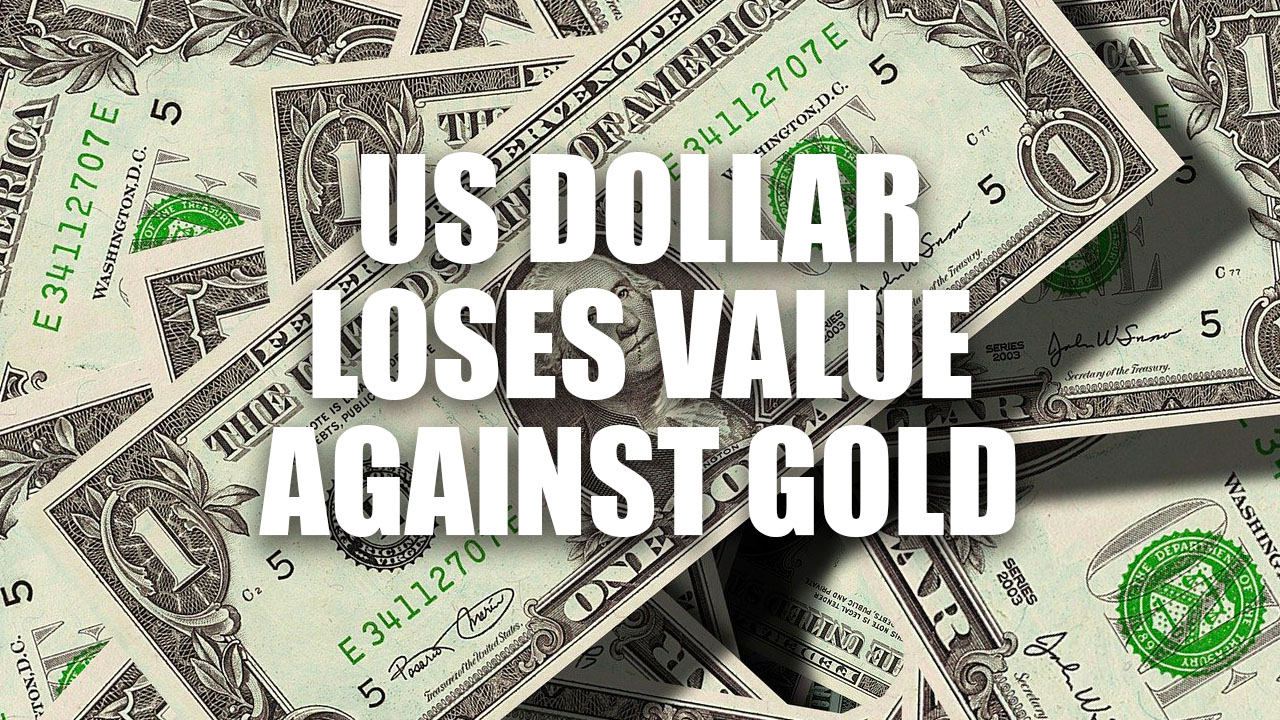
Let’s call it like it is: the traditional retirement game plan is starting to look outdated. Inflation keeps climbing, the dollar doesn’t stretch like it used to, and central banks continue flooding the system with liquidity. Meanwhile, the markets? Still as volatile and unpredictable as ever.
That’s why today’s smartest investors aren’t sitting on the sidelines—they’re taking action.
They’re turning to gold—a timeless, tangible asset that doesn’t disappear when Wall Street stumbles. Gold has quietly built and preserved wealth through centuries of financial upheaval.
This isn’t just a hedge. It’s a proven strategy for uncertain times.
📌 Gold has stood the test of time as a store of value across every major crisis.
📌 It provides a reliable safeguard against inflation and currency devaluation.
📌 Unlike stocks or bonds, gold is a physical asset you can see, hold, and control on your terms.
When the future feels uncertain, gold offers stability, security, and peace of mind. Make it a cornerstone of your retirement strategy today.
During market chaos, real assets don’t flinch. They thrive. History proves it. While equities tumble, hard assets often surge—shielding portfolios and delivering asymmetric returns when they're needed most.
And even in calm times? They add powerful diversification. That’s why the ultra-wealthy use them as a cornerstone—not a sideshow—in their wealth strategy.
Ask yourself:
🧠 Are you truly diversified?
🧠 What happens to your retirement if inflation stays elevated?
🧠 If the dollar weakens, what asset in your portfolio gets stronger?
If you don’t have a good answer, it’s time for a new conversation.
Allocating funds into the asset class known as “Real Assets” may be a strategy that you should consider.
Ask us how to Rollover a portion of Your IRA or 401k To a GOLD IRA (see link below) and:
Safeguard your assets from the collapsing dollar
Incorporate the ‘REAL ASSET’ class into your portfolio like the ultra-wealthy
Hedge against the current high-inflation conditions
Protect your retirement assets against economic crises
Just get in touch. We make it easier than ever.
CONNECT WITH US
Eric Seyboldt, MBA
Feedback or Questions?
You’re invited to get in touch with us if you’d like to find out how the Novus Financial Group can help you on your journey to a happy, fulfilling life in Retirement.
Office: 614-943-2265
Feel Free To Forward Retirement Examined To A Friend and Have Them Subscribe By Clicking The Button Below:
Reach out if you’d like to advertise your business on Retirement Examined or would like to be a sponsor.
Investment advisory services are offered by duly registered individuals on behalf of CreativeOne Wealth, LLC a Registered Investment Adviser.
The content we provide here isn’t financial advice and cannot be taken as such. Please speak to your financial advisor before making any investment decision. Also, note that every investment comes with its risks and drawbacks. Lastly, we would like to remind you that past results cannot guarantee future returns.
This website contains one affiliate link. When you click on the link and make a purchase, we may receive a commission at no additional cost to you. We only promote companies that we have personally used or researched and believe will add value to our readers