- Retirement Examined
- Posts
- Retirement Examined
Retirement Examined
5-Minutes of Breakthrough Secrets: Happy, Fulfilling Retirement

Eric Seyboldt
November 13, 2025

The weekly email that keeps you up to date on exciting Retirement topics in an enjoyable, entertaining way for free.
Life Insurance: The Most Misunderstood Asset Class
by Eric Seyboldt, MBA

Life insurance, when properly understood, isn’t merely protection against death. It is one of the most misunderstood living assets in the American household balance sheet. For families who master it, it becomes a tax-advantaged source of liquidity, leverage, and generational wealth.
1. Term Life – Protection on a Clock
Term life is the purest form of insurance—temporary coverage for a defined period, usually 10 to 30 years. It’s designed to replace lost income during the years a family is most vulnerable: when mortgages are high and children still depend on their parents’ paychecks.
A 35-year-old schoolteacher in Ohio might buy a $1 million, 20-year term policy for $40 a month. If tragedy strikes, the family receives a tax-free payout. If not, the policy expires—no savings, no return of premium. It’s economical, but temporary. The key is knowing when to graduate from renting protection to owning it.
2. Whole Life – The Discipline of Permanence
Whole Life Insurance is permanent coverage with a built-in savings engine called cash value, guaranteed to grow every year regardless of markets. For those who value stability, it’s the financial equivalent of a well-built brick home—slow to rise, impossible to blow down.
The distinction between Participating and Non-Participating Whole Life is often where financial literacy divides the novice from the seasoned planner.
Participating Whole Life is issued by mutual insurers, owned by policyholders. Profits are distributed as dividends, which can purchase additional coverage, reduce premiums, or compound within the policy—effectively a private pension that grows in the background.
Non-Participating Whole Life carries no dividends. It offers fixed guarantees and appeals to those who want pure certainty with no moving parts.
Consider a 45-year-old business owner who contributes $1,000 a month to a participating Whole Life plan. By his late 60s, his policy could carry over $300,000 in accessible cash value while maintaining a lifetime death benefit. When markets collapse, his policy remains unshaken—because actuarial mathematics, not Wall Street emotion, drives its returns.
3. Universal Life – Flexibility Meets Control
Universal Life was designed for flexibility: adjustable premiums, adjustable death benefits, and cash value that earns interest based on changing crediting rates.
Three versions exist:
Traditional UL, tied to interest rates.
Variable UL, linked to market sub-accounts.
Indexed UL (IUL), a hybrid that credits interest based on market indices like the S&P 500 but without risking principal.
It’s here that modern financial engineers discovered something profound: the ability to “be your own bank.”
Through an IUL, a policyholder can accumulate tax-deferred growth, then borrow against the cash value tax-free. The insurer uses the policy’s own cash as collateral, allowing the funds to continue compounding even while borrowed. Homeowners refinance their houses; entrepreneurs leverage business equity. But the financially educated retiree borrows from their own life insurance—earning interest on their money while simultaneously using it.
A real-world example: a 50-year-old couple funds an IUL for 15 years. By retirement, they’ve built a $400,000 cash value. They take $30,000 annual tax-free policy loans for income, all while maintaining a death benefit. The money grows, compounds, and can be repaid—or not—upon death. It’s the mechanics of banking without the banker.
4. Final Expense and Guaranteed Issue – Dignity in Simplicity
For seniors or those with health issues, small “final expense” or “guaranteed issue” policies provide modest death benefits—typically $10,000–$50,000—to cover funeral costs and debts. They’re not investment tools, but they protect dignity and spare families financial strain in grief’s hardest hour.
Stability Is the New Luxury
In the Midwest, financial wisdom has always been practical—pay off the tractor, insure the farm, leave something better behind. Life insurance, when integrated intelligently, is not a luxury for the wealthy; it’s a foundation for the disciplined.
A balanced household strategy might pair term for income replacement, whole life for permanence, and an IUL for opportunity. Together, they form an economic engine that can protect against loss, finance a child’s education, supplement retirement, and create generational capital—tax-efficient, market-resilient, and time-tested.
The truth is simple: wealth isn’t built in the headlines—it’s built quietly, through contracts that guarantee what markets can’t. Life insurance remains the one financial tool that turns uncertainty into inheritance.
Reach out to us for a complimentary, 10-minute consultation call. To learn how to structure life insurance as both protection and strategy, schedule a brief, no-pressure consultation. In just a few minutes, you’ll see how the right combination of Term, Whole Life, and Indexed Universal Life can turn uncertainty into opportunity—and protection into long-term wealth. Call 614-943-2265 to schedule your complimentary consultation. Because real financial strength isn’t built on guesswork—it’s built on informed, disciplined choices that last a lifetime.
Crash Expert: “This Looks Like 1929” → 70,000 Hedging Here
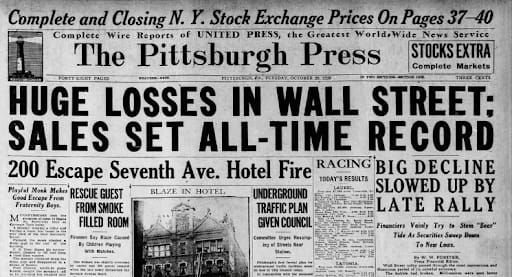
Mark Spitznagel, who made $1B in a single day during the 2015 flash crash, warns markets are mimicking 1929. Yeah, just another oracle spouting gloom and doom, right?
Vanguard and Goldman Sachs forecast just 5% and 3% annual S&P returns respectively for the next decade (2024-2034).
Bonds? Not much better.
Enough warning signals—what’s something investors can actually do to diversify this week?
Almost no one knows this, but postwar and contemporary art appreciated 11.2% annually with near-zero correlation to equities from 1995–2024, according to Masterworks Data.
And sure… billionaires like Bezos and Gates can make headlines at auction, but what about the rest of us?
Masterworks makes it possible to invest in legendary artworks by Banksy, Basquiat, Picasso, and more – without spending millions.
23 exits. Net annualized returns like 17.6%, 17.8%, and 21.5%. $1.2 billion invested.
Shares in new offerings can sell quickly but…
*Past performance is not indicative of future returns. Important Reg A disclosures: masterworks.com/cd.

The Most Overlooked Risk in Retirement — Hint - It’s Not What You Think
by Eric Seyboldt, MBA
Client: Eric, I’ve saved for decades, invested wisely, and I’m planning to withdraw $50,000 a year from my $1 million nest egg. I’m expecting about a 6% average return. But someone told me that two retirees could start with the same plan and end up in completely opposite situations. How can that happen?
Eric: It’s one of the strangest truths in finance. Two retirees can have identical plans — same savings, same returns, same withdrawal rate — and yet one could run out of money by 80 while the other dies with millions left over. The difference isn’t luck or greed. It’s timing. Specifically, the order in which they experience market gains and losses.
Client: You mean the sequence of returns?
Eric: Exactly. It’s called Sequence of Returns Risk. And it’s the hidden variable that can undo decades of good decision-making.
Imagine two retirees, both 65, both starting with $1 million, both earning an average of 6% over 30 years, both withdrawing $50,000 a year adjusted for inflation. Retiree #1 faces rough markets right after retiring — think of the early 2000s tech crash or the 2008 financial crisis. Retiree #2 starts at the same age but during a period like 2009 to 2019, when markets delivered some of the strongest gains in modern history.
They both average the same 6% return. Yet the first runs out of money around age 80, while the second passes away at 95 with roughly $2.4 million left.
Same math. Different sequence. Completely different ending.
Client: So it’s not just about how much you earn, but when you earn it?
Eric: Precisely. Look back at history. If someone retired in 2000, they got slammed by the dot-com crash, recovered briefly, then faced the Great Recession of 2008. That’s nearly a lost decade of growth at the exact time they were withdrawing money. But if they retired in 2009, they enjoyed one of the longest bull markets in history — 10 years of steady gains.
Same long-term averages, but vastly different experiences. Retiring into a storm instead of sunshine can make or break a portfolio.
Client: But there’s no way to control when those market swings happen.
Eric: True — you can’t control the market. But you can control how your income is structured. Most people spend their working lives learning how to build wealth — that’s accumulation. But the second half of the journey is about distribution — how to draw from what you’ve built without letting volatility eat it away.
When you’re still working, a market drop is just a buying opportunity. You’re adding money each paycheck, buying more shares at lower prices. But once you retire, the math reverses. You’re now selling shares to create income, and when markets fall, you have to sell more to get the same dollars. That’s where people get hurt.
Client: So how do you protect against that?
Eric: You build flexibility into your plan. That might mean setting aside a few years of cash or safe assets, or using tools like indexed annuities or IULs that let you tap income without selling investments during down markets. Think of it like having dry firewood stored for the winter — it keeps you warm when the storm hits.
The key isn’t trying to time the market; it’s preparing your income so bad timing doesn’t destroy your future.
Client: So even if the market doesn’t care when I retire, my plan should?
Eric: Exactly. The market has no sympathy for timing, but your strategy can. Retirement success isn’t about the biggest return — it’s about the right sequence of returns.
Think about it: those who retired in 1974, 2000, or 2008 faced brutal early years. Those who retired in 1982 or 2009 rode historic growth. The difference was never their discipline — it was their design.
And design is what planning is all about.
Contact us for a complimentary, 10-minute consultation. If you’d like to review your income strategy to make sure it can handle every market season — not just the sunny ones — call Eric at 614-943-2265 to schedule a complimentary 10-minute consultation. A well-built plan isn’t about guessing the future. It’s about being ready for it.
🧼 Ohio’s Most Trusted Name in Power Washing & Window Washing
Is your home’s curb appeal fading fast? You’re not alone—and there’s never been a better time to bring it back to life.
Right now, Luke’s Property Services is offering 10% OFF all power washing services—but only for a limited time (end of May)! Whether it’s your driveway, patio, deck, walkway, or siding, they’ll blast away years of grime in a single visit.
🏠 Before and after? Like night and day.
💧 Equipment? Commercial-grade and eco-friendly.
💪 Results? Shockingly clean—and they speak for themselves.
✅ Trusted by homeowners across Central Ohio
✅ Fast, professional, and always reliable
✅ No-pressure, free quotes — just text or call!

📞 Call or Text Luke’s Property Services Today: (614) 531-6979

Fixed annuities can be an essential component of a well-rounded retirement strategy, offering security, predictability, and efficiency in financial planning.
These are current fixed annuity rates and their durations from Top A-rated carriers (subject to change at any time, not FDIC insured):
Rates Are Dropping! Don’t Wait To Lock These Fixed Annuity Rates In Today!
3-year: 5.45% (under $100k Deposited)
3-year: 5.60% (over $100k Deposited)
5-year: 6.05% (under $100k Deposited)
5-year: 6.30% (over $100k Deposited)
7-year: 6.25% (under $100k Deposited)
7-year: 6.50% (over $100k Deposited)
Please feel free to call Eric at 614-943-2265 if you’d like to ask any questions or request information on these fixed annuities or other retirement topics that are on your mind.

“When properly designed, life insurance is the only asset that compounds in life, protects in crisis, and pays an amplified value at death.”
Eric Seyboldt, Economist & Financial Advisor
REAL ASSETS, Invest Like the Ultra-Wealthy
Invest Like the Ultra-Wealthy: Why Smart Money Is Flocking to Real Assets Like Gold
Let’s call it like it is: the traditional retirement game plan is starting to look outdated. Inflation keeps climbing, the dollar doesn’t stretch like it used to, and central banks continue flooding the system with liquidity. Meanwhile, the markets? Still as volatile and unpredictable as ever.
That’s why today’s smartest investors aren’t sitting on the sidelines—they’re taking action.
They’re turning to gold—a timeless, tangible asset that doesn’t disappear when Wall Street stumbles. Gold has quietly built and preserved wealth through centuries of financial upheaval.
This isn’t just a hedge. It’s a proven strategy for uncertain times.
📌 Gold has stood the test of time as a store of value across every major crisis.
📌 It provides a reliable safeguard against inflation and currency devaluation.
📌 Unlike stocks or bonds, gold is a physical asset you can see, hold, and control on your terms.
When the future feels uncertain, gold offers stability, security, and peace of mind. Make it a cornerstone of your retirement strategy today.
During market chaos, real assets don’t flinch. They thrive. History proves it. While equities tumble, hard assets often surge—shielding portfolios and delivering asymmetric returns when they're needed most.
And even in calm times? They add powerful diversification. That’s why the ultra-wealthy use them as a cornerstone—not a sideshow—in their wealth strategy.
Ask yourself:
🧠 Are you truly diversified?
🧠 What happens to your retirement if inflation stays elevated?
🧠 If the dollar weakens, what asset in your portfolio gets stronger?
If you don’t have a good answer, it’s time for a new conversation.
Allocating funds into the asset class known as “Real Assets” may be a strategy that you should consider.
Ask us how to Rollover a portion of Your IRA or 401k To a GOLD IRA (see link below) and:
Safeguard your assets from the collapsing dollar
Incorporate the ‘REAL ASSET’ class into your portfolio like the ultra-wealthy
Hedge against the current high-inflation conditions
Protect your retirement assets against economic crises
Just get in touch. We make it easier than ever.

CONNECT WITH US
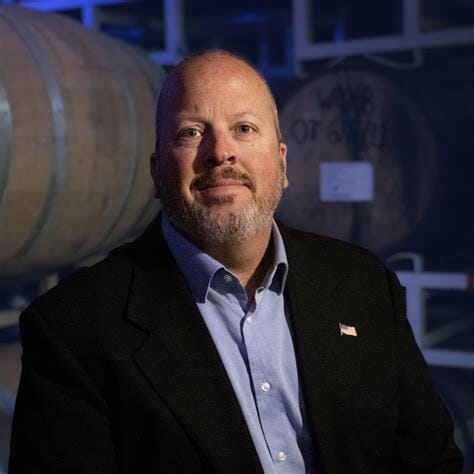
Eric Seyboldt, MBA
Feedback or Questions?
You’re invited to get in touch with us if you’d like to find out how the Novus Financial Group can help you on your journey to a happy, fulfilling life in Retirement.
Office: 614-943-2265
Feel Free To Forward Retirement Examined To A Friend and Have Them Subscribe By Clicking The Button Below:
Reach out if you’d like to advertise your business on Retirement Examined or would like to be a sponsor.
Investment advisory services are offered by duly registered individuals on behalf of CreativeOne Wealth, LLC a Registered Investment Adviser.
The content we provide here isn’t financial advice and cannot be taken as such. Please speak to your financial advisor before making any investment decision. Also, note that every investment comes with its risks and drawbacks. Lastly, we would like to remind you that past results cannot guarantee future returns.
This website contains one affiliate link. When you click on the link and make a purchase, we may receive a commission at no additional cost to you. We only promote companies that we have personally used or researched and believe will add value to our readers