- Retirement Examined
- Posts
- Retirement Examined
Retirement Examined
5-Minutes of Breakthrough Secrets: Happy, Fulfilling Retirement

Eric Seyboldt
October 09, 2025
In partnership with

The weekly email that keeps you up to date on exciting Retirement topics in an enjoyable, entertaining way for free.
The Great Tax Squeeze: How Middle-Class America Is Being Crushed From Every Angle
by Eric Seyboldt, MBA

Across kitchen tables from Ohio to Kansas, families are asking the same question: How can two people work full-time, earn decent salaries, and still come up short every month? The answer isn’t found in reckless spending or poor budgeting—it’s in the countless layers of taxation that quietly drain middle-class households from every direction.
For most Americans, the system feels rigged not because of greed or laziness, but because the rules themselves are stacked.
The Paycheck That Isn’t
The middle-class burden begins before the first cup of coffee is poured. A worker earning $80,000 might see more than a quarter of that gone before it reaches their bank account. Federal income tax, state income tax, Social Security, and Medicare combine to remove a large share of every paycheck. What’s left is already stretched thin by rising costs—and yet, the taxes don’t stop there.
Every remaining dollar is taxed again the moment it’s spent.
Taxes at the Register
Sales taxes capture what’s left of the paycheck. Groceries, school supplies, clothing, gas, electricity, and phone bills all come with hidden taxes built into the price. A family spending $50,000 a year can easily lose $4,000–$5,000 to sales and excise taxes without realizing it.
Gasoline is one of the most visible examples. Between federal, state, and local taxes, more than 50 cents per gallon often goes to government—every mile to work, every trip to the store, becomes a small payment for the right to participate in the economy.
The Property Tax Problem
For homeowners, the largest bite often comes from property taxes. A modest $350,000 home may carry a $7,000 annual tax bill. That’s not an optional expense—it’s due every year, whether a family’s income rises or not.
And it doesn’t end there. When a furnace breaks, when a roof needs replaced, or when an addition is built—contractors pass along their own taxes, business fees, and compliance costs to the homeowner. The layers pile up.
For many families, what they thought was an asset begins to feel like a never-ending expense account for the local government.
What most middle-class Americans don’t realize is that they’re also paying secondary taxes—costs buried in the prices of products and services that never appear on a receipt. Here are the most common:
Corporate Taxes – When companies are taxed on their profits, those costs are passed down to consumers through higher prices. Every grocery bill, car payment, or appliance purchase carries a hidden portion of the company’s tax burden.
Excise Taxes – These are “specific product” taxes on items like gasoline, alcohol, tobacco, and airline tickets. They are intended to fund infrastructure or discourage certain behaviors, but in practice, they fall hardest on working families who must drive to work or travel for family obligations.
Utility Taxes and Fees – Local governments often add taxes to electric, gas, and water bills. These are not always visible on the surface but are built into your monthly total. The average household pays several hundred dollars a year just in energy-related taxes.
Telecommunications Taxes – Every cell phone bill includes multiple line-item taxes: federal, state, and local. These fund everything from 911 systems to state technology projects. They can add up to 20% of a typical phone bill.
“Sin” Taxes – Alcohol, tobacco, and now sugary beverages carry extra taxes meant to influence consumer behavior. While the intent is health-related, these taxes are regressive—hitting working-class families proportionally harder than the wealthy.
Import and Tariff Taxes – When tariffs are placed on imported goods, retailers pass those costs on to consumers. Tariffs are taxes by another name, inflating the price of everything from electronics to groceries.
Each of these taxes, viewed alone, may appear small. But together, they quietly consume thousands of dollars a year from middle-class families already battling inflation, stagnant wages, and rising housing costs.
The Tax No One Votes On
The cruelest layer of all isn’t listed on any form: inflation.
When prices rise faster than wages, purchasing power shrinks. It’s a hidden tax created by deficit spending and the expansion of the money supply.
Inflation doesn’t ask permission—it simply takes value from every dollar saved. The cautious saver, the responsible retiree, and the young family trying to build a nest egg all lose ground quietly, even as their nominal incomes stay the same.
The Erosion of the Middle Class
In effect, the American middle class pays taxes on income, on property, on purchases, on energy, on investments, and even on the money it tries to save. Meanwhile, the programs funded by those taxes often do little to reduce the costs of living that keep families on edge.
These aren’t complaints from the idle—they’re the lived realities of nurses, teachers, electricians, and small business owners who do everything right and still struggle to get ahead.
A Nation of Earners Deserves Relief
The problem isn’t that Americans are unwilling to pay their share. It’s that their share has grown larger than anyone realizes. Each layer, viewed alone, may seem manageable. Together, they quietly undermine financial progress.
When the most responsible citizens—those who work, save, and contribute—can no longer see the benefit of doing so, the nation loses its balance.
America’s middle class doesn’t need handouts—it needs breathing room. Because when the people who keep the country running can’t make ends meet, the economy itself begins to break down.
Reach out to us for a complimentary, 10-minute consultation call. Middle-class families face more financial pressure than ever—from taxes on income and property to the hidden taxes buried in every purchase and utility bill. A thoughtful retirement plan can help protect what you’ve earned from those drains on your wealth.
To discuss strategies that defend your income and preserve your purchasing power, schedule your complimentary 10-minute consultation by calling 614-943-2265. Careful planning today can help you keep more of what’s yours tomorrow.
Home insurance rates up by 76% in some states

Over the last 6 years, home insurance rates have increased by up to 76% in some states. Between inflation, costlier repairs, and extreme weather, premiums are climbing fast – but that doesn’t mean you have to overpay. Many homeowners are saving hundreds a year by switching providers. Check out Money’s home insurance tool to compare companies and see if you can save.

How Smart Retirees Use Leverage to Accelerate Freedom
by Eric Seyboldt, MBA
Client: Eric, I’ve always been told to stay out of debt, especially near retirement. Isn’t that the golden rule?
Eric: That’s the traditional rule—but not necessarily the smart one. The truth is, debt isn’t inherently bad. It’s a tool. And like any tool, it can either build or destroy, depending on how it’s used. Debt acceleration—using borrowed money strategically to pay off or outpace existing liabilities—is one of the most powerful financial levers for those approaching retirement, if executed correctly.
Client: Debt acceleration sounds risky. How does it actually work?
Eric: It starts by changing how you think about money flow. Most retirees treat debt as something to fear. But the financially astute use leverage to attack it. Think of it as a chess game: instead of retreating, you use every piece to advance your position.
Let’s say a retiree still has a mortgage, a car loan, and credit card balances. Each has different interest rates and payment schedules. By strategically redirecting surplus cash flow—or using short-term leverage such as a home equity line—to eliminate the highest-cost debt first, then rolling those freed-up payments into the next tier, the retiree creates a compounding snowball of debt destruction. It’s the same math the banks use against borrowers—only now, it’s turned back on them.
Client: But isn’t borrowing against a home or portfolio in retirement dangerous?
Eric: Only if you misunderstand the purpose. The goal isn’t to add debt—it’s to control it. A well-structured leverage plan borrows at a lower cost to eliminate higher-cost obligations faster. For example, borrowing at 5% to extinguish credit card debt at 18% or consolidating scattered liabilities under one efficient umbrella. That difference in interest spread is the engine that accelerates payoff.
The hidden power here is velocity. By increasing the speed of cash rotation—using each dollar more than once—you’re reclaiming control from compound interest. The banks no longer dictate the tempo. You do.
Client: How does this strategy benefit someone nearing retirement specifically?
Eric: Near retirement, time becomes the most valuable asset—and the most limited. Traditional “slow-pay” methods can’t always catch up with inflation or rising living costs. Debt acceleration creates breathing room, reduces monthly obligations, and boosts liquidity right when it’s needed most.
Imagine walking into retirement with fewer payments, more equity, and preserved savings. Instead of draining investment accounts to pay off loans, retirees can use controlled leverage to keep their money invested, earning returns that outpace borrowing costs. It’s the same principle used by institutions—applied to household economics.
Client: So debt can actually be a stepping stone to financial freedom?
Eric: Exactly. It’s all about intent. Unmanaged debt is a burden; managed debt is a bridge. Every dollar saved on interest is a dollar that can compound for you instead of against you. The real question isn’t whether debt is good or bad—it’s whether it’s working for you or the lender.
Client: What’s the ultimate takeaway for someone feeling buried by debt today?
Eric: Don’t let fear dictate your financial strategy. Leverage, when handled intelligently, can shorten the path to independence. It’s not about owing less—it’s about owning more.
When used with discipline and precision, debt becomes what it was always meant to be: a servant, not a master.
Retirement isn’t the time to shrink back from strategy—it’s the time to refine it. The greatest irony in personal finance is that the very thing people run from—debt—can become the instrument that sets them free.
Contact us for a free, brief 10-minute consultation. To discuss strategies that defend your income and preserve your purchasing power, schedule your complimentary 10-minute consultation by calling 614-943-2265. Careful planning today can help you keep more of what’s yours tomorrow.
🧼 Ohio’s Most Trusted Name in Power Washing & Window Washing
Is your home’s curb appeal fading fast? You’re not alone—and there’s never been a better time to bring it back to life.
Right now, Luke’s Property Services is offering 10% OFF all power washing services—but only for a limited time (end of May)! Whether it’s your driveway, patio, deck, walkway, or siding, they’ll blast away years of grime in a single visit.
🏠 Before and after? Like night and day.
💧 Equipment? Commercial-grade and eco-friendly.
💪 Results? Shockingly clean—and they speak for themselves.
✅ Trusted by homeowners across Central Ohio
✅ Fast, professional, and always reliable
✅ No-pressure, free quotes — just text or call!

📞 Call or Text Luke’s Property Services Today: (614) 531-6979

Fixed annuities can be an essential component of a well-rounded retirement strategy, offering security, predictability, and efficiency in financial planning. Consider them a “CD On Steroids”.
These are current fixed annuity rates and their durations from Top A-rated carriers (subject to change at any time, not FDIC insured):
Rates Are Maxing Out! Don’t Wait To Lock These Fixed Annuity Rates In Today! 6.65% is possible now!
3-year: 5.50% (under $100k Deposited)
3-year: 5.75% (over $100k Deposited)
5-year: 6.20% (under $100k Deposited)
5-year: 6.45% (over $100k Deposited)
7-year: 6.40% (under $100k Deposited)
7-year: 6.65% (over $100k Deposited)
Please feel free to call Eric at 614-943-2265 if you’d like to ask any questions or request information on these fixed annuities or other retirement topics that are on your mind.

“The taxpayer—that’s someone who works for the federal government but doesn’t have to take the civil service exam.”
Ronald Reagan
REAL ASSETS, Invest Like the Ultra-Wealthy
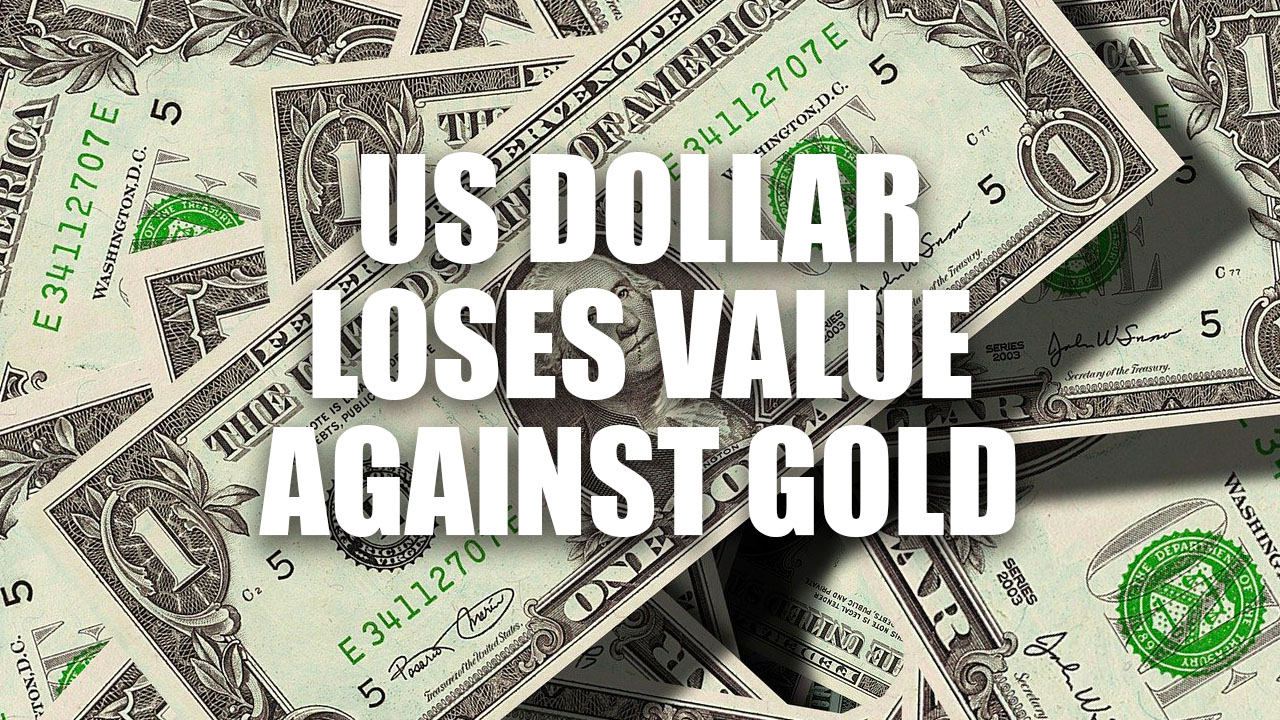
Why Smart Money Is Flocking to Real Assets, Like Gold
Let’s be honest: the old retirement playbook is showing its age. Inflation keeps eating away at every paycheck, the dollar buys less with every trip to the store, and the Fed’s answer to everything still seems to be, “add more liquidity.” Meanwhile, Wall Street swings like a weather vane in a tornado.
That’s why the savviest investors aren’t waiting around for stability — they’re building it themselves.
They’re shifting toward gold — not out of nostalgia, but out of wisdom. It’s one of the few assets that doesn’t vanish when markets panic. Through every crash, crisis, and currency experiment, gold has quietly done its job: preserve purchasing power when everything else forgets how.
This isn’t a fad or a fear play. It’s discipline. It’s history. And in uncertain times, it’s common sense wearing a golden coat.
📌 Gold has stood the test of time as a store of value across every major crisis.
📌 It provides a reliable safeguard against inflation and currency devaluation.
📌 Unlike stocks or bonds, gold is a physical asset you can see, hold, and control on your terms.
When the future feels uncertain, gold offers stability, security, and peace of mind. Make it a cornerstone of your retirement strategy today.
During market chaos, real assets don’t flinch. They thrive. History proves it. While equities tumble, hard assets often surge—shielding portfolios and delivering asymmetric returns when they're needed most.
And even in calm times? They add powerful diversification. That’s why the ultra-wealthy use them as a cornerstone—not a sideshow—in their wealth strategy.
Ask yourself:
🧠 Are you truly diversified?
🧠 What happens to your retirement if inflation stays elevated?
🧠 If the dollar weakens, what asset in your portfolio gets stronger?
If you don’t have a good answer, it’s time for a new conversation.
Allocating funds into the asset class known as “Real Assets” may be a strategy that you should consider.
Ask us how to Rollover a portion of Your IRA or 401k To a GOLD IRA (see link below) and:
Safeguard your assets from the collapsing dollar
Incorporate the ‘REAL ASSET’ class into your portfolio like the ultra-wealthy
Hedge against the current high-inflation conditions
Protect your retirement assets against economic crises
Just get in touch. We make it easier than ever.
CONNECT WITH US

Eric Seyboldt, MBA
Feedback or Questions?
You’re invited to get in touch with us if you’d like to find out how the Novus Financial Group can help you on your journey to a happy, fulfilling life in Retirement.
Office: 614-943-2265
Feel Free To Forward Retirement Examined To A Friend and Have Them Subscribe By Clicking The Button Below:
Reach out if you’d like to advertise your business on Retirement Examined or would like to be a sponsor.
Investment advisory services are offered by duly registered individuals on behalf of CreativeOne Wealth, LLC a Registered Investment Adviser.
The content we provide here isn’t financial advice and cannot be taken as such. Please speak to your financial advisor before making any investment decision. Also, note that every investment comes with its risks and drawbacks. Lastly, we would like to remind you that past results cannot guarantee future returns.
This website contains one affiliate link. When you click on the link and make a purchase, we may receive a commission at no additional cost to you. We only promote companies that we have personally used or researched and believe will add value to our readers